Short answer: for a Trocadéro proposal without the tourists, come at sunrise, around 7 a.m. in spring, 6:45 in June and 8:15 in winter. I stand about thirty metres to the side with a telephoto lens, and we agree on a discreet signal so I know when the moment is coming.
Every week, someone writes to me saying they want to propose at the Trocadéro “but without the tourists.” I always give the same answer: it’s possible, and it comes down to a single variable: the time.
Seven in the morning, not eight
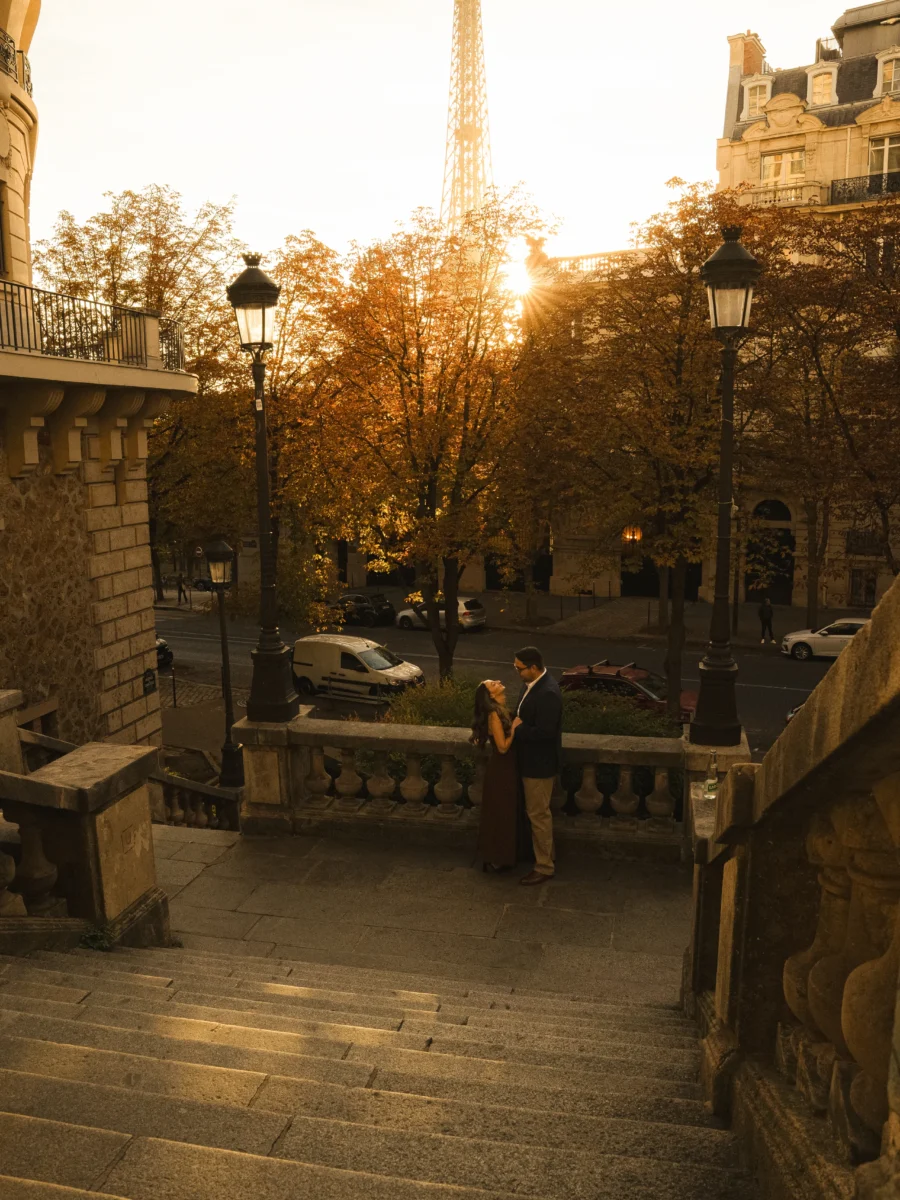
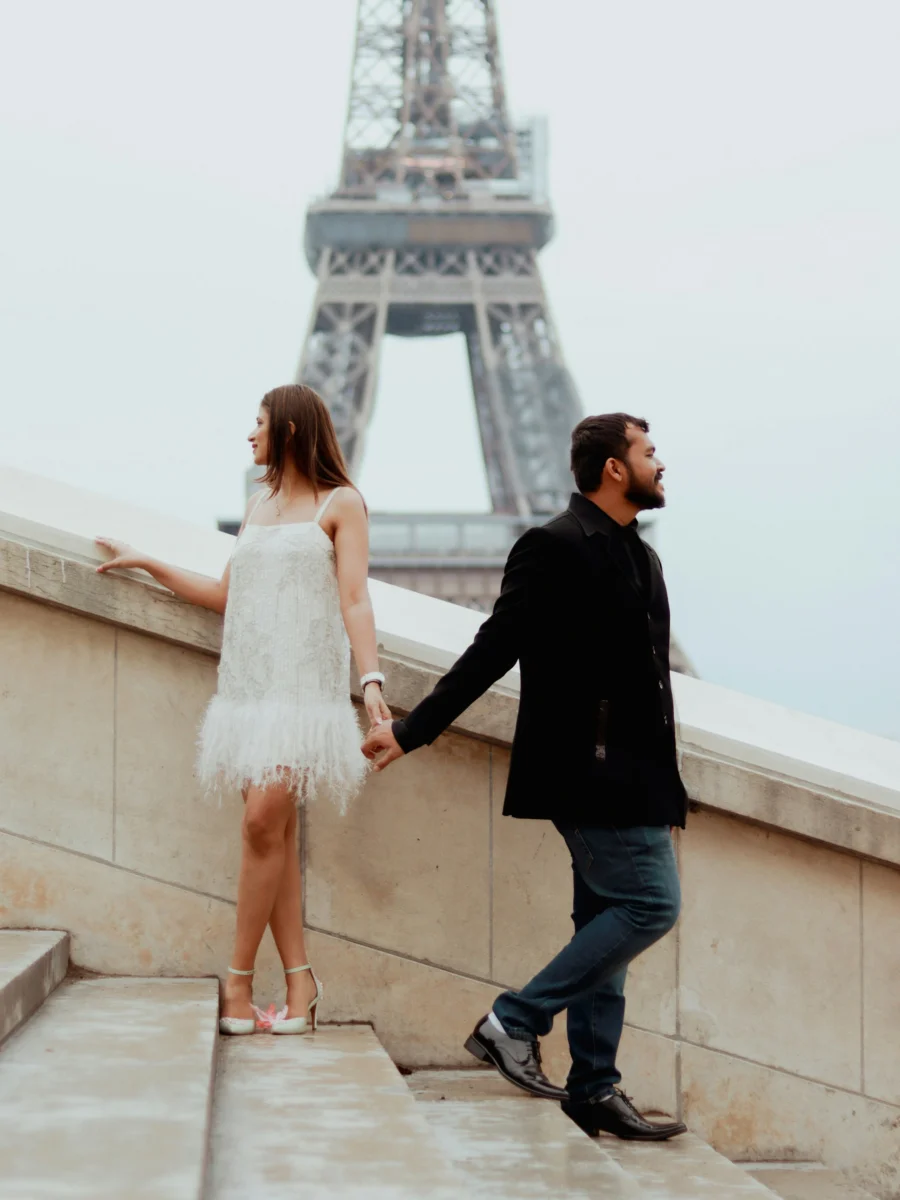
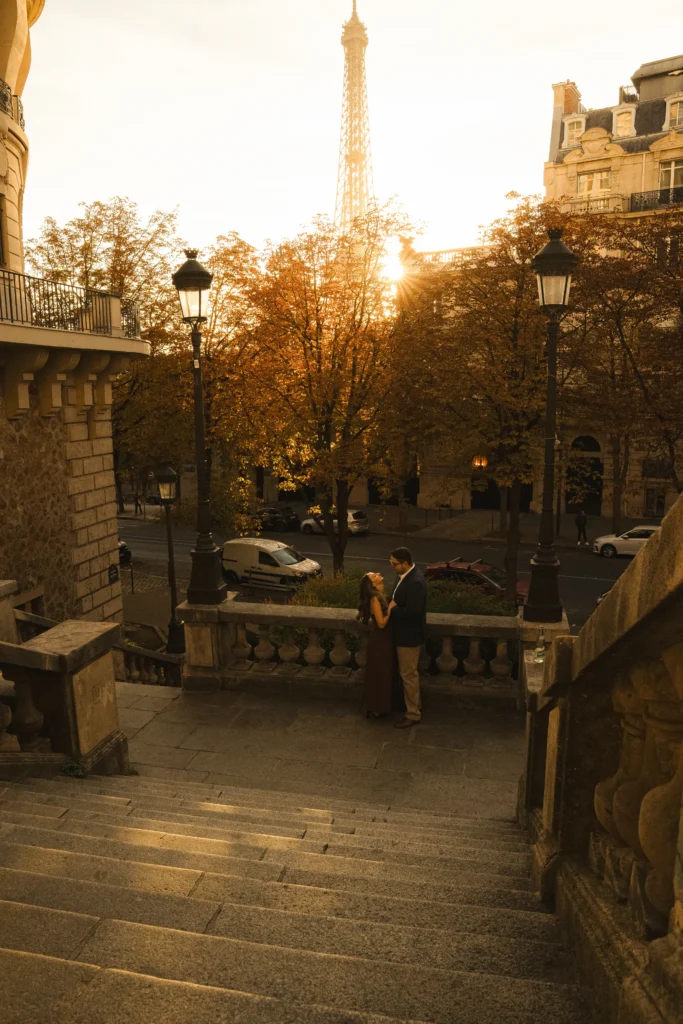
The Trocadéro esplanade belongs to everyone from nine o’clock onward. Before eight, it belongs to joggers and three wedding photographers. In between, there’s a window of about forty minutes where the light is still low and warm, the tower is lit on its east face, and you can stand at the railing without anyone walking through your shot.
In winter this window shifts: the sun rises around 8:30, so arriving at 8:15 is fine. In June, you need to be there by 6:45. It’s early. It’s also why photos taken at that hour look like nothing else.
The “how do I get her there” problem
This is the real difficulty, and it has nothing to do with photography. Getting someone out of bed at six in the morning on vacation without raising suspicion takes a solid excuse. The three that work best, based on what clients tell me:
- a breakfast reservation “that only had early slots”;
- a flight or train later that day, which justifies starting early;
- a fake guided tour, with a fake confirmation email.
What doesn’t work: suggesting a morning walk for no reason. Nobody buys it, especially not someone who’s known you for years.
Where I stand
I usually position myself around thirty metres away, off to the side, with a telephoto lens. From a distance, I look like any other visitor photographing the tower. We agree on a signal beforehand (adjusting your scarf, switching your bag to the other hand), so I know the moment is close and start shooting continuously.
One thing I always tell people: don’t look for the lens. The temptation to check I’m really there is strong. That’s exactly what gives the staging away, both to your partner in the moment and in the images afterward.
The ten minutes after
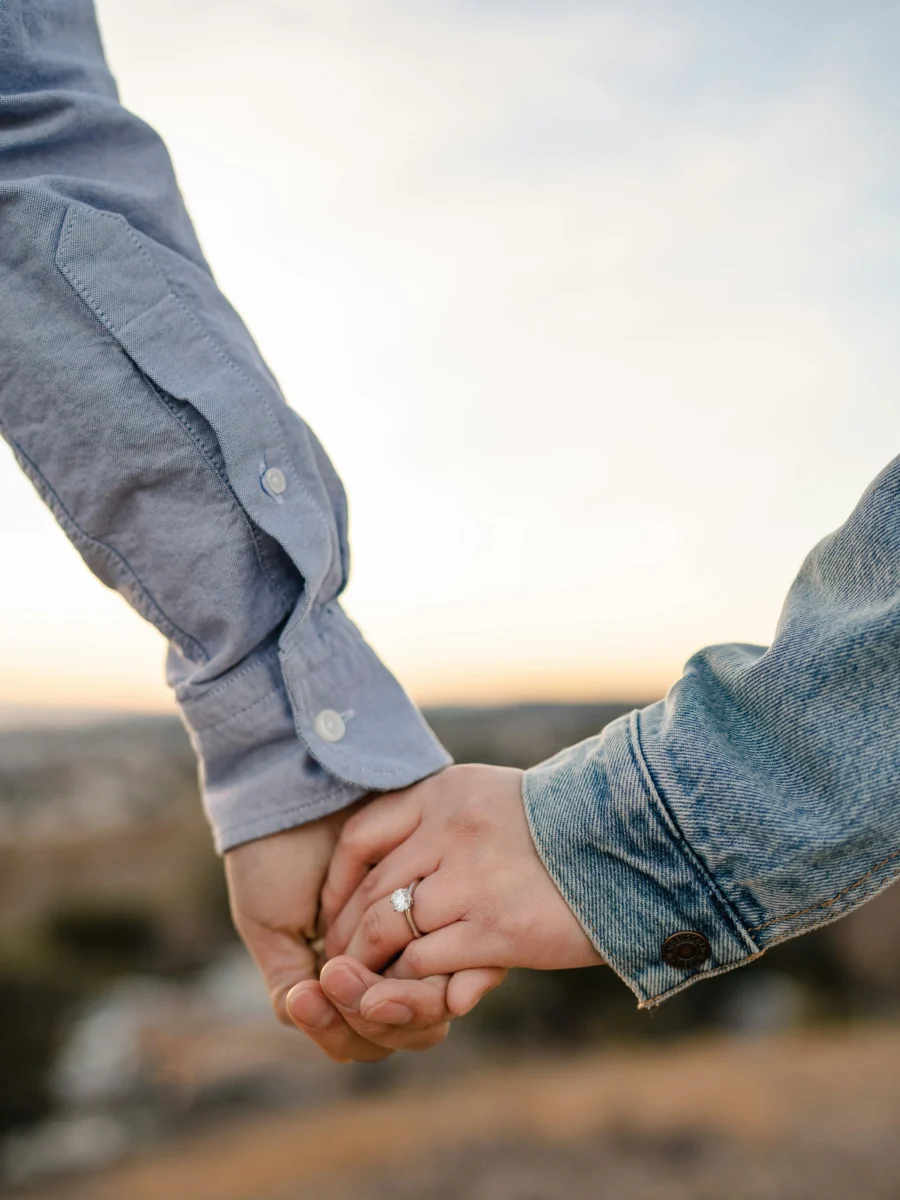
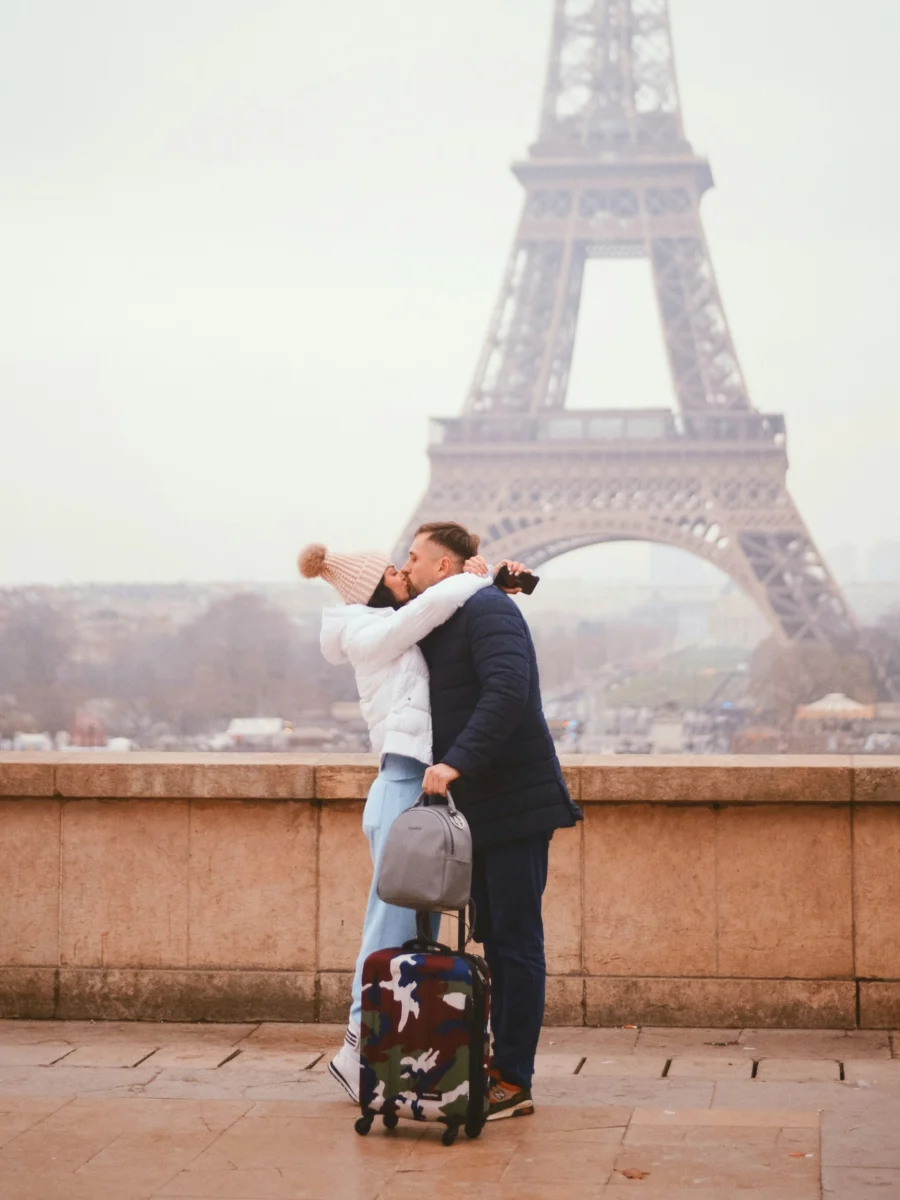
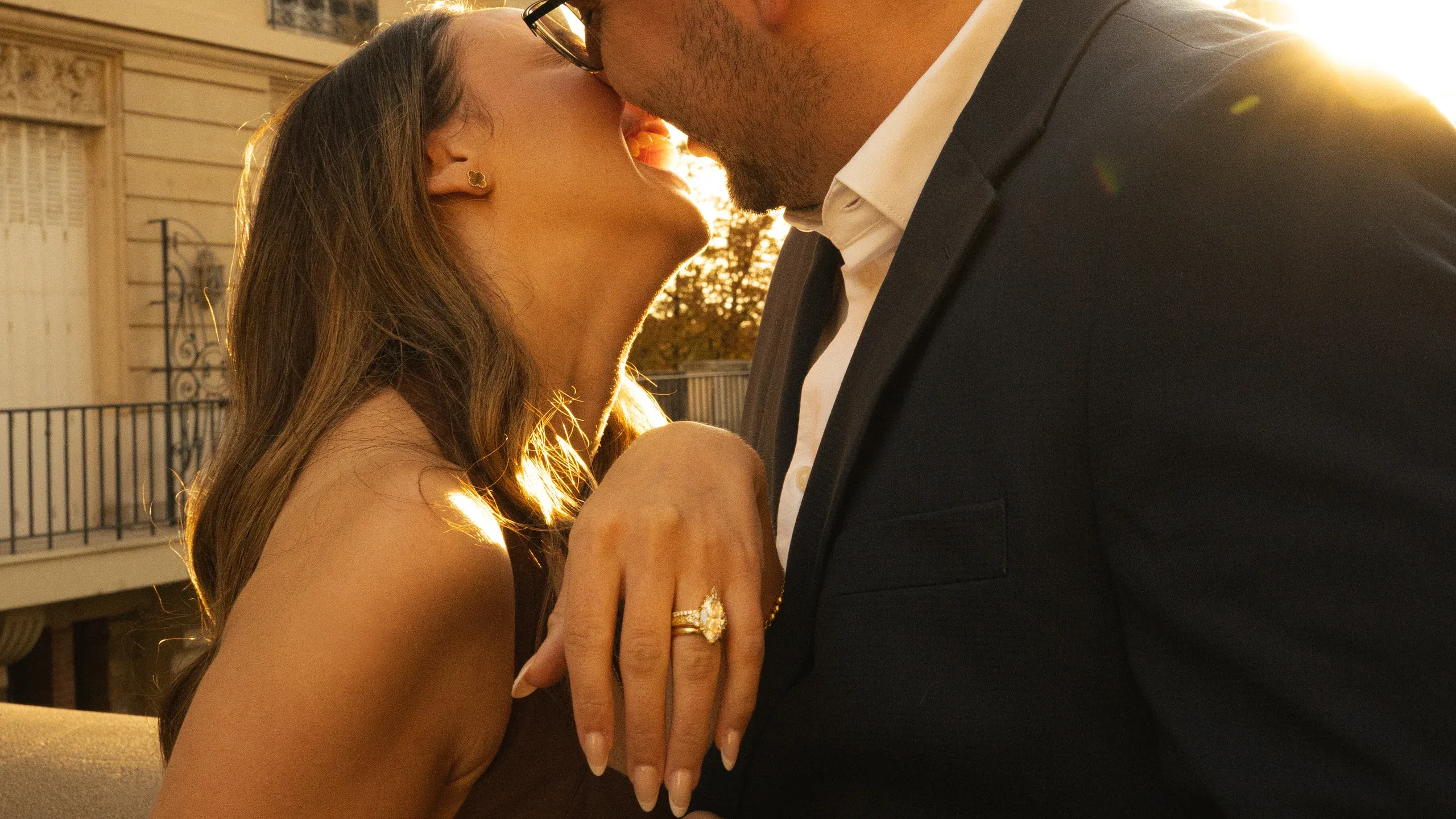
These are often the best. The tension has lifted, your partner is crying or laughing, calling their mother, looking at the ring from every angle. That’s when I move in and the couple session really begins. Out of the forty-five minutes of coverage, the proposal itself rarely lasts more than two minutes; everything else is this aftermath.
And if it rains
We decide the evening before. Paris in the rain makes beautiful images: the cobblestones reflect the light, umbrellas add colour. But you have to want it. If that’s not you, the usual backup is the Galerie Vivienne or the arcades of the Palais-Royal: covered, bright, and practically empty at that hour.
Either way, the backup plan is decided at booking, not in a panic the morning of.
Planning a proposal at the Trocadéro? The proposal session page details how the shoot itself works.
See also: how the photographer stays invisible during a surprise proposal
Frequently asked questions
What time should you propose at Trocadéro?
At sunrise: around 7 a.m. in spring, 6:45 in June, 8:15 in winter. From 9 a.m. the esplanade is full.
How do you get your partner there that early without raising suspicion?
With a solid excuse: a breakfast booked on an early slot, a flight or train later in the day, or a fake guided tour.
How long does the session last?
Forty-five minutes of coverage: the proposal itself rarely takes more than two minutes, the rest is the couple session that follows.